
Introduction: Electronic Health Records
Electronic health records are changing the way healthcare providers manage patient data and deliver care. In today’s fast-moving healthcare environment, relying on paper-based systems is no longer efficient or scalable.
With electronic health records, clinics and hospitals can store, access, and manage patient information digitally, ensuring faster workflows and better clinical decisions.
What Are Electronic Health Records?
Electronic health records are digital versions of a patient’s complete medical history. These records are stored securely and can be accessed by authorized healthcare providers when needed.
They typically include:
- Patient demographics
- Medical history
- Diagnoses and treatment plans
- Lab results and imaging
- Prescription records
This makes healthcare delivery more organized and efficient.
Why Electronic Health Records Are Important
Healthcare providers are rapidly adopting electronic health records to improve operations and patient care.
1. Faster Access to Patient Data
Doctors can instantly access patient records, reducing delays during consultations.
2. Improved Accuracy
Digital systems reduce errors caused by manual documentation.
3. Better Coordination
Multiple departments can collaborate using shared electronic health records.
4. Enhanced Patient Experience
Patients benefit from faster service and more personalized care.
Key Features of Electronic Health Records Systems
A modern system offers powerful tools beyond just data storage.
Centralized Patient Records
All information is stored securely in one place.
Smart Scheduling Integration
Helps manage appointments and patient flow efficiently.
E-Prescriptions
Doctors can send prescriptions digitally.
Billing & Reporting
Integrated systems support healthcare billing and analytics.
Cloud-Based Access
Access electronic health records anytime, anywhere.
How Electronic Health Records Improve Patient Care
Using electronic health records, healthcare providers can deliver better and safer care.
- Quick access to complete patient history
- Reduced duplication of tests
- Better tracking of treatments over time
- Improved clinical decision-making
This leads to better outcomes and higher patient satisfaction.
Electronic Health Records in Digital Healthcare
The shift toward digital healthcare has made electronic health records a core system in modern clinics.
They work alongside:
- Patient management software
- Telemedicine platforms
- Appointment scheduling systems
This creates a connected ecosystem for seamless healthcare delivery.
How AkraHealth Supports Electronic Health Records
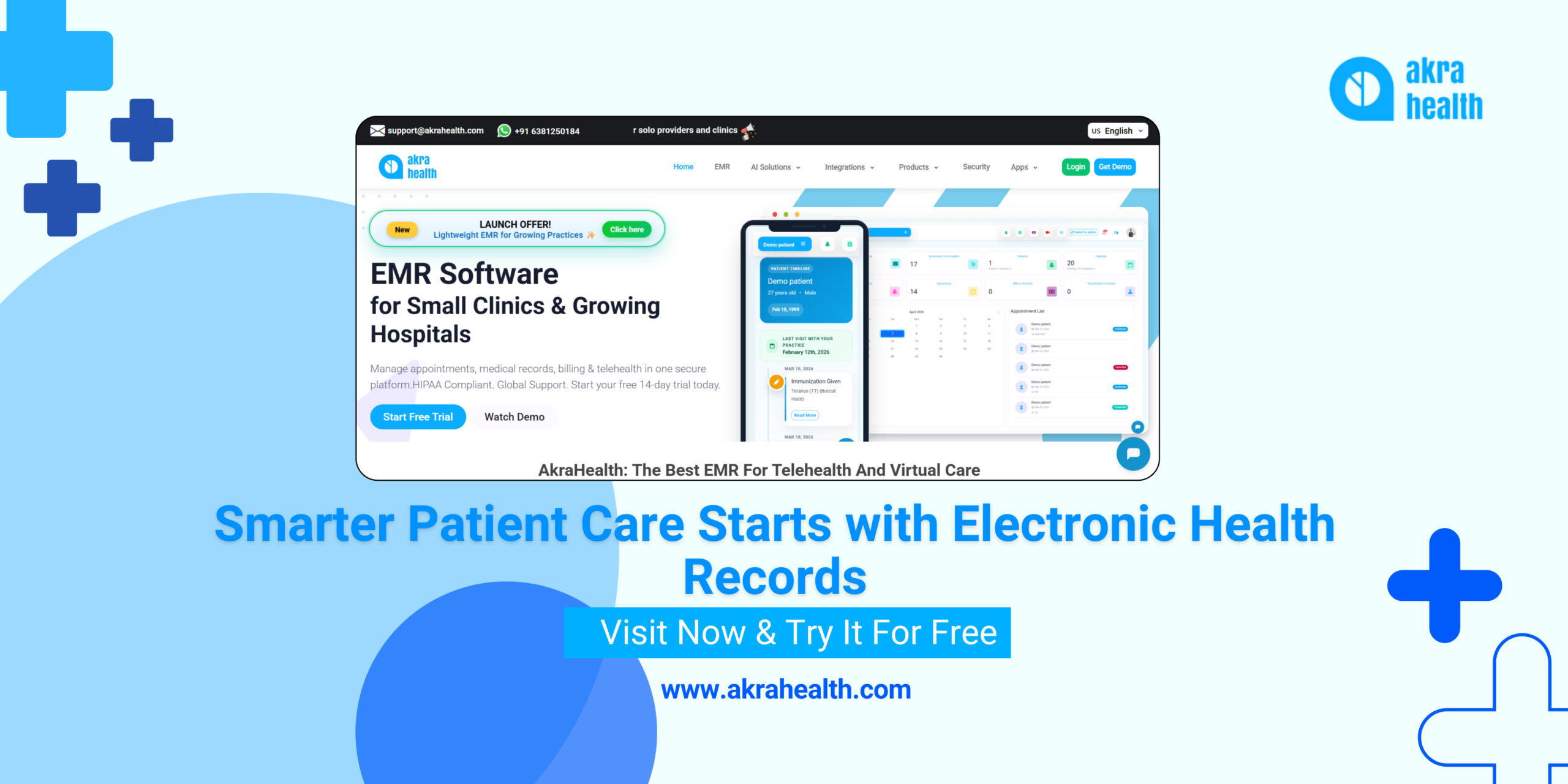
AkraHealth provides a smart solution built around electronic health records to simplify healthcare operations.
Key Benefits:
- Unified dashboard for patient data
- AI-powered insights for decision-making
- Integrated scheduling and billing
- Secure cloud storage
Internal Link Suggestions:
Explore Patient Management Software
Explore Telehealth Solutions
Outbound Link Suggestion:
Refer to global healthcare standards like WHO digital health initiatives
Best Practices for Using Electronic Health Records
To maximize the benefits of electronic health records, clinics should:
- Train staff effectively
- Maintain data accuracy
- Ensure proper system integration
- Regularly update software
Future of Electronic Health Records
The future of electronic health records is driven by advanced technology:
- AI-powered analytics
- Voice-based documentation
- Predictive healthcare insights
- Mobile-first access
These innovations will continue to improve healthcare delivery.
Conclusion
Electronic health records are no longer optional-they are essential for modern healthcare systems. They improve efficiency, reduce errors, and enhance patient care.
By adopting electronic health records, healthcare providers can build a smarter, more connected, and patient-focused system.
1 thought on “The Future of Healthcare: Electronic Health Records”