
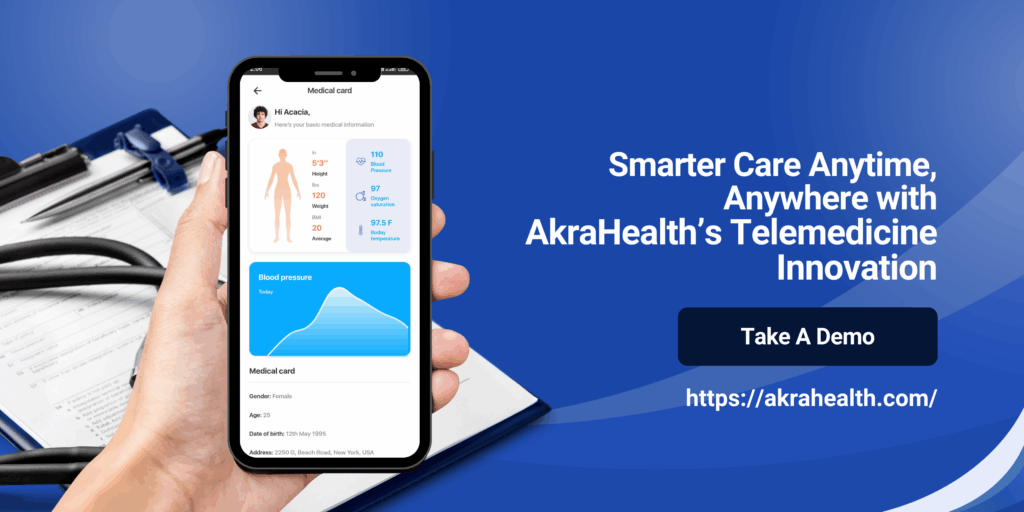
Introduction: Telemedicine App
The healthcare industry is evolving rapidly, and the telemedicine app stands at the heart of this transformation. By connecting patients and doctors remotely, it redefines how healthcare is accessed and delivered.
In today’s world, where timely care, digital health records, and patient convenience are vital, the telemedicine app bridges gaps between patients and providers. With the integration of AI in patient management, digital medical records software, and cloud-based patient management systems, telemedicine is not just about virtual visits anymore. It’s about transforming healthcare delivery into a smarter, more connected experience.
What Is a Telemedicine App?
A telemedicine app is a digital platform that enables patients to consult healthcare professionals online through secure video calls, chats, or voice interactions.
But its value goes far beyond communication. A telemedicine app integrates seamlessly with electronic medical health records software (EMR), appointment scheduling applications, and patient management software to ensure continuity of care.
It’s a complete healthcare ecosystem, one that combines AI, real-time data, and automated workflows to create an efficient, patient-centered experience.
Why Telemedicine Apps Are Gaining Popularity
1. Access and Convenience
The biggest advantage of telemedicine is accessibility. Patients no longer need to wait in queues or travel for consultations. Using a doctor appointment application or telemedicine mobile app, they can instantly book an appointment and connect with a healthcare provider from anywhere.
This has revolutionized healthcare delivery, particularly in rural areas, where access to quality medical services has always been a challenge.
2. Integrated Patient Management System
Today’s telemedicine apps integrate with advanced healthcare patient management systems that automatically update patient histories, diagnostic results, and treatment plans.
This digital patient management approach ensures every stakeholder, doctor, nurse, or administrator, views a unified patient record, reducing medical errors and improving coordination.
For example, a hospital patient management system connected to telehealth automatically syncs progress notes, billing, and prescriptions, creating an error-free documentation process.
3. AI-Enhanced Healthcare Efficiency
AI has become the backbone of modern telemedicine. By analyzing massive datasets, AI systems help doctors diagnose faster and more accurately.
Key AI roles in patient management include:
- Predictive analytics to identify potential health risks.
- Automated appointment reminders and follow-ups.
- Detection of prescription errors.
- Smart decision support during consultations.
This AI in patient management framework not only saves time but enhances quality care delivery.
4. Secure EMR and Digital Patient Health Records
A good telemedicine app integrates EMR medical records software to make patient histories instantly available. This transparency reduces duplicate services, improves efficiency, and promotes evidence-based treatment.
With electronic patient management systems, all medical data from prescriptions to reports is stored securely, ensuring compliance and patient privacy.
5. Streamlined Appointment Scheduling
With appointment scheduling applications, patients can easily:
- Check live doctor availability
- Book or reschedule appointments
- Receive reminders automatically
For providers, this reduces no shows and maintains an organized workflow. Integration with patient management software ensures every appointment ties to an accurate patient record.
6. Cost-Effective Healthcare Delivery
Telemedicine apps minimize costs for both patients and providers. Hospitals reduce operational expenses and infrastructure needs, while patients save on travel and waiting time.
Smaller clinics benefit from cloud-based patient management solutions that scale affordably without heavy upfront investments covering everything from billing to e-prescriptions.
7. Better Workflows for Doctors and Teams
With electronic medical health records software, healthcare teams collaborate effortlessly. A cardiologist can instantly access lab reports uploaded by a general physician. AI-based patient management platforms also help automate administrative work, freeing doctors to focus on patient care.
8. On-Demand Patient Monitoring
AI-enabled telemedicine platforms allow real-time health monitoring through wearables and IoT devices. Doctors can track vitals, like heart rate or blood oxygen, anywhere, anytime.
Early anomaly detection means timely intervention, improving patient safety and outcomes.
9. The Role of AI in Patient Management
AI in patient management enhances decision-making by studying past and current data to predict risks. AI chatbots handle common patient queries and initial triage, while smart algorithms help prioritize emergency cases.
With each advancement, the telemedicine app becomes more intelligent, personalized, and efficient.
10. Enhanced Patient Experience
Ultimately, the success of telemedicine lies in patient satisfaction. A telemedicine app empowers patients to connect instantly with healthcare professionals, access digital records, and receive follow-ups automatically.
When integrated with the best patient management software, this system promotes communication transparency, continuity of care, and personalized treatment, leading to higher trust and engagement.
Telemedicine Apps and the Future of Healthcare
The global telemedicine market continues to grow, especially in India, where digital initiatives and AI-powered healthcare startups are expanding access to care.
Next-generation telemedicine platforms will bring:
- Voice enabled AI assistants for diagnostics
- Integration with wearables for continuous monitoring
- Predictive health alerts
- Seamless EMR and EHR synchronization
Challenges in Adopting Telemedicine Apps
Despite tremendous growth, challenges remain:
- Data privacy and compliance
- Limited internet access in rural areas
- Need for training on electronic patient management systems
- Regulatory alignment with emerging technologies
However, with innovation from leaders like AkraHealth, these barriers are being reduced each day.
Conclusion
The telemedicine app is no longer just a convenience—it’s the cornerstone of modern, patient-centered healthcare. Combining AI in patient management, digital medical records, and cloud-based healthcare systems, it empowers doctors and patients alike.
For healthcare providers ready to evolve, AkraHealth delivers advanced telemedicine and patient management solutions—bridging the gap between technology and human care. With AkraHealth, healthcare becomes smarter, faster, and more accessible—anytime, anywhere.
1 thought on “Telemedicine App: Revolutionizing Patient Management in Modern Healthcare”