
Patient Management in Healthcare: From Paper Files to AI-Driven Digital Care
For decades, patient management relied heavily on paper files, manual processes, and time-consuming administrative tasks. Today, patient management in healthcare is undergoing a major transformation as hospitals and clinics adopt digital systems and AI-powered tools to improve accuracy, speed, and patient outcomes.
As patient volumes increase and healthcare becomes more complex, providers are moving toward digital patient management, electronic patient management, and fully integrated online platforms. These systems streamline everything—from appointments to diagnostics, billing, and communication.
This blog explores how digital tools, AI automation, and platforms like AkraHealth are redefining patient management for modern healthcare facilities.
What Is Patient Management in Healthcare?
Patient management refers to handling every stage of the patient journey—from the first interaction to diagnosis, treatment, and follow-up. It includes:
- Patient record management
- Appointment scheduling
- Clinical documentation
- Treatment tracking
- Billing and insurance coordination
- Communication between providers and patients
A hospital patient management system centralizes all this information in a single digital platform. This ensures accuracy, accessibility, and real-time updates across departments.
Why Digital Patient Management Matters Today
1. Faster Access to Patient Records
Paper-based systems slow down workflows and increase the risk of errors.
Digital patient record management offers instant access to:
- Medical history
- Lab results
- Diagnostic imaging
- Medication history
- Treatment plans
This improves decision-making and enhances the clinical experience.
2. Higher Patient Safety
Digital systems provide automated alerts such as:
- Drug interaction warnings
- Allergy alerts
- Duplicate prescription notifications
- AI-based patient risk indicators
These features reduce medical errors and support safer, more accurate care.
3. Higher Staff Productivity
Automation handles routine tasks such as:
- Appointment reminders
- Patient check-ins
- Data entry
- Uploading medical reports
This allows staff to focus on patient care instead of paperwork.
4. A Better Overall Patient Experience
With digital patient management tools, patients enjoy:
- Shorter wait times
- Online appointment scheduling
- Faster registration
- Easy access to diagnostic reports
- Clear communication
The result is a smoother and more satisfying patient journey.
5. Improved Collaboration Across Departments
Modern healthcare requires tight coordination between:
- Radiology
- Laboratory
- Pharmacy
- Billing
- Telehealth teams
A unified patient management platform ensures that every department has synchronized access to real-time updates.
How AI Is Transforming Patient Management
AI is becoming central to modern healthcare systems. It enhances accuracy, streamlines decisions, and speeds up care delivery.
Predictive Analytics
AI identifies high-risk patients early by analyzing symptoms, vitals, and historical records.
Automated Documentation
AI voice-to-text reduces manual typing, saving several hours per clinician every week.
Smart Scheduling
AI predicts peak hours, patient flow, and no-show patterns to optimize staff and resources.
AI-Based Clinical Decision Support
AI highlights abnormal lab results, critical values, and recommended treatment pathways.
This level of intelligence is shaping a more proactive and efficient healthcare environment.
What to Look for in the Best Patient Management Software
When evaluating a patient management solution, consider these essential features:
1. Digital Patient Registration
Paperless onboarding and identity verification.
2. Centralized Patient Record Management
A unified dashboard showing records, reports, medications, and history.
3. Online Appointment Scheduling
Patients can book, modify, and receive reminders instantly.
4. Integrated EMR + PMS System
A combined clinical and administrative workflow.
5. Telemedicine Integration
Remote consultations with complete record syncing.
6. Automated Billing & Claims
Fewer errors and faster revenue cycles.
7. Patient Communication Tools
Secure messaging, report sharing, and engagement tools.
8. HIPAA-Level Security
Encryption, access control, audit logs, and secure servers.
AkraHealth: A Next-Generation Patient Management Platform
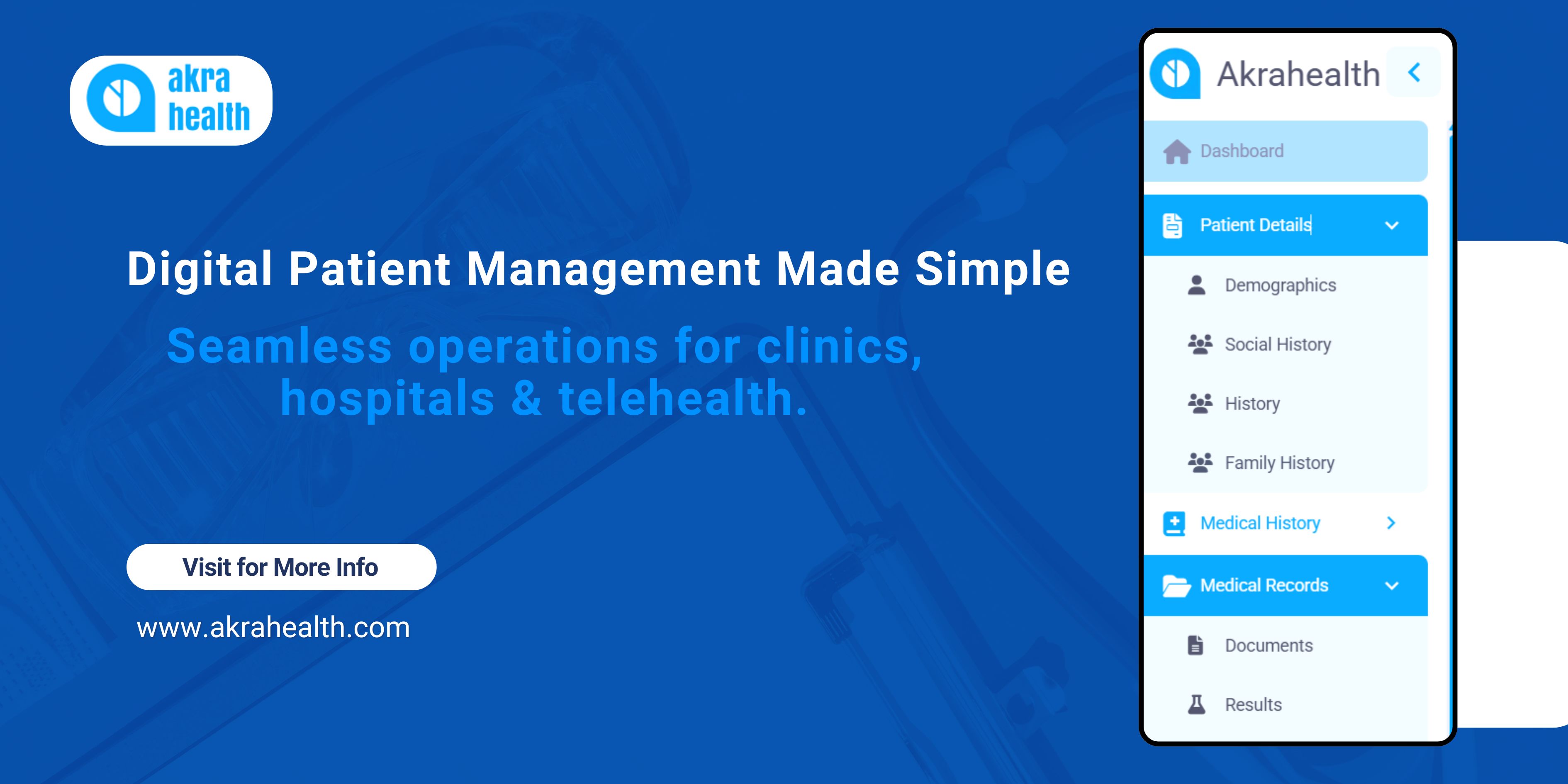
AkraHealth combines electronic patient management, digital health, EMR/EHR, telemedicine, and billing—all in one platform.
1. Connected Patient Management Dashboard
Clinicians can access everything—clinical, administrative, and billing data—from one screen.
2. AI-Assisted Patient Insights
Predictive analytics help identify patient risk and improve decision-making.
3. Seamless Online Patient Management System
Patients can easily book appointments, view reports, and communicate digitally.
4. Mobile-First Experience
Records, medications, reminders, and follow-ups accessible via mobile.
5. Secure & Compliant Platform
AkraHealth uses encryption, audit logs, and strict access control to protect sensitive data.
Final Thoughts
Patient management in healthcare is evolving rapidly. Digital patient management systems, electronic patient records, and AI-based workflows are improving accuracy, reducing administrative burden, and enhancing patient outcomes.
Platforms like AkraHealth represent the future of healthcare—automated, connected, intelligent, and patient-centered.
Healthcare providers who adopt these digital systems today will deliver better care, create more efficient operations, and lead the next generation of healthcare innovation.
1 thought on “Patient Management in Healthcare: From Paper Files to AI-Driven Digital Care”