
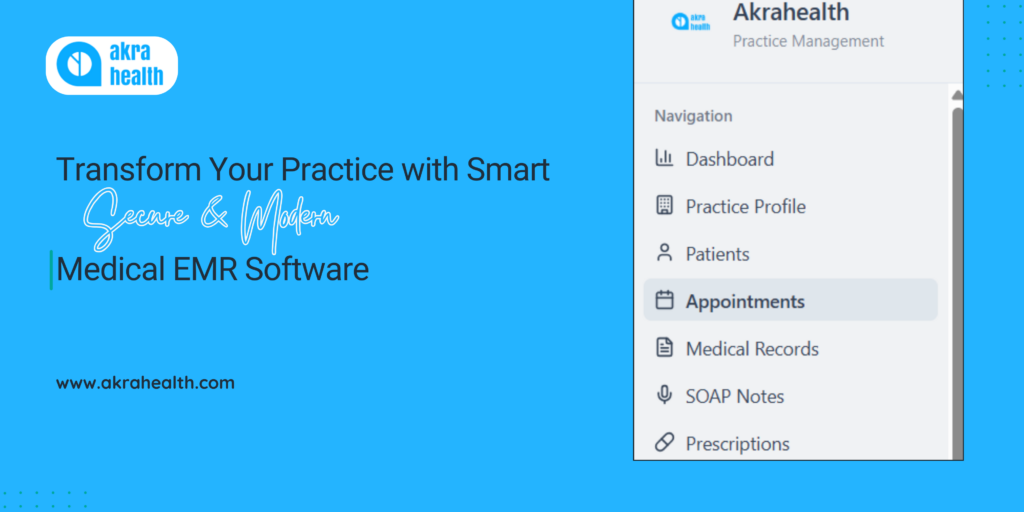
A Complete Overview of Modern Electronic Management Records
The healthcare industry is rapidly transforming with digital innovation, and medical EMR software plays a central role in this shift. With millions of new patients entering the healthcare system each year, clinics and hospitals must adopt electronic medical management tools to ensure accuracy, reduce errors, and improve operational efficiency.
Electronic Management Records Software (EMR-S) provides a secure, organized, and centralized digital solution to manage the growing volume of patient data. From medical histories to lab results, prescriptions, billing, and scheduling, EMR systems help providers coordinate every aspect of patient care.
This article offers a comprehensive overview of medical EMR software, its features, benefits, and its growing importance in healthcare operations and revenue cycle management.
1. Improved Documentation
EMR software streamlines documentation with structured templates, voice typing, and digital charting. This improves accuracy and enhances the overall patient experience.
2. A Single Source of Truth
Having one centralized record ensures that every provider across the practice accesses the same accurate and updated information.
3. Better Medication Management
With built-in alerts, prescription tools, and digital medication lists, providers can manage prescriptions safely and efficiently.
4. Smarter Billing Workflows
EMR software supports medical billing with features like coding accuracy, claim submission, denial management, and automated billing workflows.
5. Fewer Errors
By eliminating manual processes, EMR software significantly reduces administrative, documentation, and billing errors.
Why Every Healthcare Provider Needs Medical EMR Software
Modern healthcare requires speed, accuracy, and seamless coordination. Here’s how medical EMR software supports that:
1. Centralized Patient Records
Providers can instantly access diagnoses, lab reports, allergies, images, prescriptions, and historical data—anytime, anywhere. This increases decision-making accuracy and reduces the risk of oversight.
2. Smarter Scheduling
Automated reminders, cancellation management, and online booking reduce missed appointments and administrative workload.
3. Faster Documentation
Using templates, voice recognition, and digital charting, providers can record notes quickly and accurately.
4. Integrated Billing Management
A high-quality EMR integrates:
- Medical billing services
- Coding
- Claim submissions
- Claim denial management
- Remote billing workflows
This results in faster reimbursement and fewer insurance errors.
5. Better Patient Experience
Patients can easily:
- Book appointments online
- Access their medical history
- Request prescriptions
- Message their provider
Access multi-location care
EMR vs EHR: What’s the Difference?
Although often used together, they differ slightly:
Feature | EMR | EHR |
Focus | Internal practice records | Shareable across clinics |
Use Case | Single practice | Multi-location care |
Interoperability | Limited | High |
Most modern medical EMR software now includes EHR-like interoperability features.
Why EMR Software Is Critical for Medical Billing Companies
Medical billing companies benefit from EMR systems in several ways:
- Accurate medical coding
- Faster claim submissions
- Fewer billing errors
- Better compliance
- Real-time financial reporting
With more accurate and timely billing, clinics and providers experience increased cash flow and higher satisfaction.
Choosing the Best EMR Software: Key Factors to Consider
When selecting a medical EMR system, evaluate the following:
✔ Practice size & specialty
✔ Required integrations (billing, labs, pharmacy, telehealth)
✔ Customizable forms & templates
✔ Long-term scalability
✔ HIPAA & data security compliance
✔ Ease of use for staff
✔ Cost-effective pricing plans
The right EMR should support your long-term digital growth strategy.
The next stage in EMR innovation includes:
- Predictive analytics
- Automated charting
- AI-assisted clinical decision-making
- Real-time practice analytics
- Automated claim processing
These advancements will make patient care faster, safer, and more accurate than ever.
Conclusion
Medical EMR software is no longer optional—it is essential for running a modern, efficient, and scalable healthcare practice. With benefits like improved documentation, integrated billing, accurate patient data, and streamlined workflows, EMR systems empower healthcare providers to deliver high-quality care with fewer errors.
A unified EMR solution connects appointment scheduling, patient records, billing, analytics, and compliance—forming the backbone of digital healthcare.
1 thought on “Medical EMR Software: A Complete Overview of Modern EMR”