
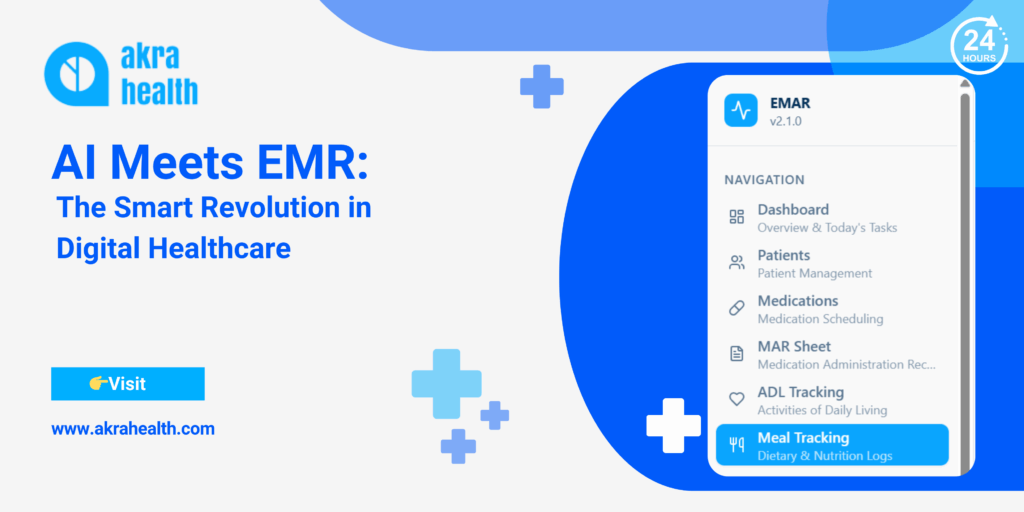
Introduction: What is Electronic Medical Record Systems?
An electronic medical record system (EMR) is a digital platform for healthcare providers to enter, manage, and access patient data in real-time.
This includes diagnosis notes, medication history, laboratory results, and everything else that would typically be recorded on paper files, all organized in one secure and organized location.
EMR systems significantly reduce duplication and time related to patient record keeping and can vastly cut back and (most importantly) reduce errors inherent with paper records.
Most hospitals in today’s times, utilize medical EMR systems that are cloud-based, facilitating effortless sharing of patient data in real time between doctors, labs, and pharmacies. This specifically enhances the quality of care coordination, and subsequently patient outcomes.
A New Age of Digital Healthcare
Electronic medical record systems (EMRs) have become the digital heartbeat of hospitals and clinics in the current healthcare space. Once upon a time, there were stacks of paper files to keep track of everything from medical prescriptions to lab reports.
Today, EMRs are powerfully integrated into data systems. However, we are experiencing a new player in the world of EMR systems: Artificial Intelligence (AI). The pairing of AI and EMRs is not just streamlining processes, it is changing the entire healthcare delivery model.
AI: The Intelligence Behind New Age EMR Systems
When applied to healthcare solutions, AI takes EMR software to a whole new level of intelligence. Rather than just serving as a passive depository of data, AI is transforming EMRs into an active decision-support tool.
Here are some examples:
- Smarter Processing of Data
AI has the ability to analyze enormous medical data sets–from laboratory results to imaging scans-to recognize patterns that a person might miss, and, in turn, aids physicians in diagnosing faster and more accurately.
- Predictive Analytics
AI algorithms are capable of predicting patient risk; for instance, detecting early signs of diabetes or heart disease based upon historical data stored in an EMR program. With this predictive knowledge, preventive care could truly become a prospect rather than reactive care.
- Automated Clinical Documentation
AI utilizes Natural Language Processing (NLP) to transform handwritten or vocalized documentation by a doctor into structured digital data. This automation could easily save hours of administrative work every week as well as increase accuracy.
- Customized Treatment Plans
By analyzing patient data, AI in healthcare can suggest personalized treatment options by modifying medication dosages, and/or identifying other options for therapies that fit a patient’s unique needs.
Advantages of AI-Driven EMR Systems
The partnership between AI and electronic medical record systems adds value at each tier of healthcare:
- Precision: Automated data entry diminishes human error and confidently keeps records “up to date.”
- Quickness: Doctors spend less time documenting and more time helping patients.
- Productivity: AI optimizes scheduling, returns of billing, and reporting workflows.
- Accessibility: Cloud-based EMR systems make patient information available via any device, at any place.
- Better Decision Making: AI analytics entitle physicians to make informed decisions based on data, with confidence.
EHR Programs and Integrative Healthcare
Whereas EMR systems focus on the data within one organization, EHR programs (electronic health records) allow for a linkage between health information and other health care providers.
AI can integrate hospitals, labs, and specialists into one EHR system. Here, if a patient visits a new doctor, their entire history (tests, treatments, allergies) can now be accessed to provide seamless continuity of care.
Why AI Will Be the Future of Medical EMR Systems
The future of electronic medical record systems will involve more than documentation. We will soon be entering into another phase where AI not only collects data but also interprets it, real-time.
Imagine, though:
- AI summarizes patient visit notes on the fly.
- Data collected verbally, allowing hands-free documentation.
- Predictive alerts to prevent disease and unwellness.
- Seamless connectivity between EMR and wearable devices collecting health data.
Many of these changes are happening now in Artificial Intelligence (AI) in Healthcare & Medical Field to increase the speed and safety and connectivity of care.
A Smarter Systems and Healthier Outcomes.
The partnership between AI and electronic medical record systems will be the next frontier of digital healthcare.
From smarter diagnoses to personalized care, AI is redefining the EMR and the EMR experience, making it an intelligent partner for doctors and patients alike to either assist care providers with decision-making or engage patients at key touch points of their care.
As healthcare continues to evolve, the organizations that embrace AI-powered EMR systems will ultimately make healthcare delivery easier for their operations and redefine what we mean by quality patient care.
And at the end of the day, this isn’t about technology, it’s about the use of intelligence to make care a more humanistic experience.
1 thought on “The Impact of Artificial Intelligence on Electronic Medical Record Systems”