
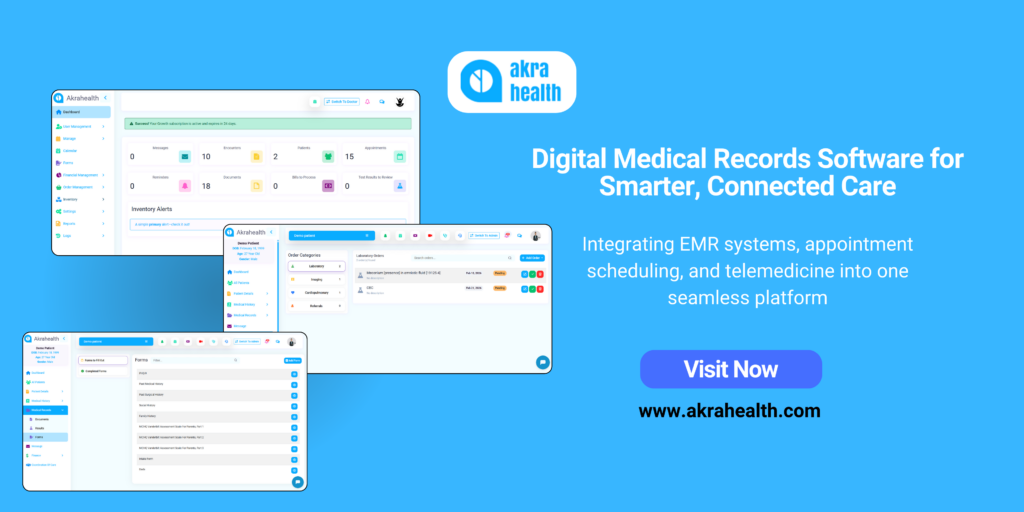
Digital Medical Records Software: Transforming Modern Healthcare
Digital medical records software is reshaping how healthcare providers manage patient data, streamline operations, and deliver care. As clinics and hospitals move away from paper-based documentation, digital solutions are becoming essential for efficiency, compliance, and patient satisfaction.
Today’s healthcare environment demands fast access to information, secure storage, and seamless integration with scheduling and telemedicine tools. This is where digital medical records software plays a central role.
What Is Digital Medical Records Software?
Digital medical records software refers to platforms that store, organize, and manage patient health information electronically. These systems replace traditional files with secure, cloud-based or on-premise digital records.
Unlike basic documentation tools, modern electronic medical record systems offer advanced features such as:
- Real-time patient data access
- Automated documentation workflows
- Secure data sharing
- Integrated reporting and analytics
This allows providers to improve care coordination while reducing administrative burden.
Why Healthcare Providers Need Digital Solutions
Managing patient data manually increases the risk of errors and delays. With digital medical records software, providers gain a centralized system that simplifies documentation and enhances workflow efficiency.
Healthcare practices benefit from:
- Faster charting and updates
- Reduced paperwork
- Improved communication
- Better compliance with regulations
Modern emr medical records software ensures accurate record-keeping while saving valuable clinical time.
Integration with Appointment Scheduling Applications
Efficiency doesn’t stop at documentation. Advanced digital medical records software integrates seamlessly with appointment scheduling applications and tools like a doctor appointment application.
This integration allows healthcare providers to:
- Automate booking workflows
- Reduce no-shows with reminders
- Sync appointment data with patient records
- Improve patient experience
Patients can use an app for doctors appointments to schedule visits easily, while providers access updated information instantly within the system.
Supporting Telemedicine and Mobile Healthcare
Healthcare is no longer limited to in-clinic visits. A modern digital medical records software solution connects directly with a telemedicine mobile app, enabling virtual consultations and remote patient care.
When digital records and telemedicine platforms work together:
- Providers access complete patient histories during virtual visits
- Notes are automatically saved to records
- Follow-ups are scheduled efficiently
- Communication becomes more streamlined
This unified approach enhances accessibility and continuity of care.
Features to Look for in Digital Medical Records Software
Choosing the right digital medical records software is critical for long-term success. Here are key features healthcare organizations should prioritize:
1. User-Friendly Interface
An intuitive dashboard ensures providers spend less time navigating the system.
2. Secure Data Management
Data encryption and controlled access protect patient information.
3. Interoperability
Compatibility with emr electronic medical records software and other healthcare systems ensures smooth data exchange.
4. Automated Workflows
Automation reduces repetitive administrative tasks and improves efficiency.
5. Scalability
As practices grow, the system should adapt without disrupting operations.
Benefits for Clinics and Hospitals
Implementing digital medical records software provides measurable advantages across healthcare organizations.
- Enhanced productivity
- Better patient engagement
- Improved data accuracy
- Faster clinical decision-making
- Reduced operational costs
By combining documentation, scheduling, and telehealth capabilities, modern electronic medical record systems support a more connected healthcare environment.
Improving Patient Experience Through Digital Innovation
Patients today expect convenience and transparency. With integrated digital medical records software, healthcare providers can offer:
- Online appointment booking
- Secure patient portals
- Faster access to medical history
- Simplified follow-ups
When paired with a reliable doctor appointment application, the overall care journey becomes smoother and more patient-centered.
The Future of Digital Medical Records Software
The future of digital medical records software lies in intelligent automation, predictive analytics, and deeper integration with healthcare technologies. As digital transformation continues, providers who adopt advanced systems will gain a competitive edge in delivering efficient, high-quality care.
Innovations in electronic medical record systems will further streamline workflows, improve interoperability, and enhance clinical insights.
Conclusion
Digital medical records software is no longer optional — it is essential for modern healthcare operations. From managing patient records to integrating scheduling tools and telemedicine platforms, these systems empower providers to work smarter and deliver better outcomes.
By investing in scalable and secure digital medical records software, healthcare organizations can future-proof their operations while enhancing both efficiency and patient satisfaction.