
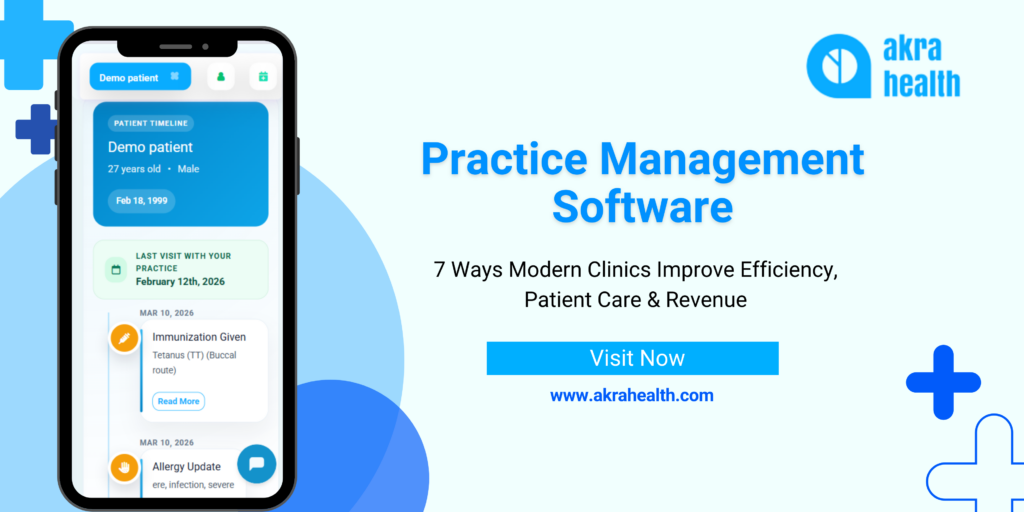
Practice Management Software: 7 Ways to Improve Clinics
Running a successful healthcare practice today involves much more than managing appointments. Clinics need to coordinate patient records, billing, telehealth consultations, prescriptions, and follow-up communication while maintaining a high standard of care.
This is why Practice Management Software has become an essential investment for healthcare providers. Instead of relying on disconnected tools and manual processes, clinics can manage daily operations from one integrated platform.
In this article, we’ll explore seven ways modern healthcare practices use technology to improve efficiency, reduce administrative work, and deliver a better patient experience.
1. Centralize Patient Information
One of the biggest challenges for clinics is managing patient information across multiple systems.
A modern platform stores:
- Patient demographics
- Medical history
- SOAP notes
- Diagnoses
- Laboratory reports
- Prescriptions
- Follow-up history
Having everything in one place reduces duplicate work and helps clinicians make informed decisions faster.
2. Automate Appointment Scheduling
Scheduling is one of the busiest administrative tasks in any clinic.
Modern systems allow patients to:
- Book appointments online
- Receive automated reminders
- Reschedule appointments
- Cancel appointments digitally
This reduces missed appointments while improving the overall patient experience.
3. Simplify Billing and Invoicing
Manual billing often creates delays and increases the risk of errors.
A digital solution helps practices:
- Generate invoices instantly
- Track payments
- Manage healthcare billing
- Process insurance claims
- Monitor outstanding balances
Automated workflows help clinics maintain healthier cash flow with less administrative effort.
4. Improve Clinical Documentation
Accurate documentation is critical for delivering quality care.
Integrated electronic medical records allow providers to:
- Record SOAP notes
- Capture diagnoses
- Upload reports
- Maintain treatment history
- Access patient information securely
Digital documentation also makes future consultations faster and more consistent.
5. Expand Care Through Telehealth
Patients increasingly expect healthcare that is convenient and accessible.
Virtual consultations allow providers to:
- Conduct follow-up visits
- Review reports remotely
- Offer specialist consultations
- Reduce unnecessary travel
- Improve continuity of care
Telehealth has become an important extension of modern healthcare delivery.
6. Use Analytics to Make Better Decisions
Healthcare leaders need more than patient records, they need actionable insights.
Analytics dashboards can help monitor:
- Appointment trends
- Revenue performance
- Provider utilization
- Patient growth
- Billing performance
These insights support better planning and continuous operational improvement.
7. Choose a Platform That Grows With Your Practice
Healthcare technology should support long-term growth rather than create additional complexity.
An ideal solution should combine:
- Electronic medical records
- Smart appointment scheduling
- Telehealth consultations
- e-Prescriptions
- Billing and invoicing
- Analytics dashboards
Platforms like AkraHealth bring these capabilities together in one connected ecosystem, allowing clinics to manage operations efficiently while delivering a better patient experience. Instead of switching between multiple applications, healthcare providers can work from a single platform designed to simplify everyday workflows.
What to Look for Before Choosing a Solution
Before investing in software, healthcare providers should evaluate:
✔ Cloud-based access
✔ Data security and compliance
✔ Easy-to-use interface
✔ Appointment management
✔ Billing automation
✔ Telehealth support
✔ Reporting dashboards
✔ Scalability
Choosing software that supports future growth helps reduce operational challenges as patient volume increases.
Final Thoughts
Healthcare continues to become more digital, and clinics need technology that simplifies operations without compromising patient care.
The right Practice Management Software helps healthcare providers automate repetitive tasks, improve documentation, streamline billing, enhance scheduling, and support virtual care.
Whether you’re managing a small clinic or a multi-location practice, adopting an integrated platform like AkraHealth can help improve efficiency while creating a smoother experience for both staff and patients.
2 thoughts on “Practice Management Software: 7 Ways Modern Clinics Improve Efficiency”