
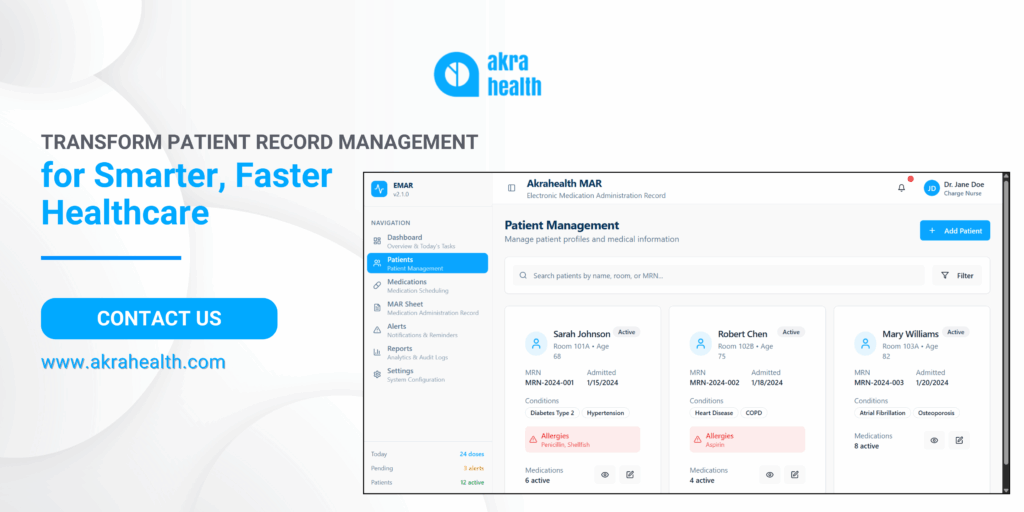
Patient Record Management: The Digital Transition in Healthcare
Healthcare is rapidly evolving in a technology-driven world. From virtual consultations to AI-assisted diagnoses, digital innovation is reshaping how care is delivered. At the core of this transformation is patient record management, a critical tool that ensures medical personnel have immediate access to accurate, organized health information.
Efficient patient record management empowers healthcare providers to make informed clinical decisions, improves patient safety, reduces administrative workload, and strengthens the relationship between patients and providers. Using modern healthcare patient management software, hospitals and clinics can securely store, track, and manage medical data in real-time, enabling seamless, high-quality care.
What is Patient Record Management?
Patient record management is the systematic process of collecting, storing, and accessing patient health information. Traditionally, hospitals maintained extensive paper records for each patient, which often led to misplaced files, inefficiencies, and delays.
Modern digital patient management systems solve these challenges by digitizing patient data. These systems provide healthcare providers with immediate access to complete medical histories, assist in clinical decision-making, and ensure continuity of care.
A robust hospital patient management system integrates data from multiple sources, including lab reports, imaging, and doctor notes, ensuring that every clinician has a complete, up-to-date view of the patient’s medical journey.
The Importance of Patient Record Management in Healthcare
Efficient patient management in healthcare is essential for several reasons:
- Seamless Accessibility: Doctors and staff can access patient records instantly, even remotely.
- Error Reduction: Digital systems minimize mistakes from manual data entry.
- Enhanced Collaboration: Healthcare teams across departments can coordinate more effectively.
- Patient Safety: Comprehensive records reduce the risk of misdiagnosis.
- Regulatory Compliance: Systems meet data protection regulations like HIPAA, ensuring patient confidentiality.
Modern patient management software ensures that patient information is accurate, secure, and available whenever needed.
From Paper to Digital: The New Normal
The shift from paper files to digital patient management platforms has transformed healthcare workflows. Patient record management solutions now integrate with hospital operations to automate tasks like appointment scheduling, billing, and patient tracking.
By implementing electronic patient management systems, hospitals reduce administrative burdens while improving operational efficiency. Many systems also integrate with telemedicine apps and EMR software, creating a seamless, connected digital healthcare ecosystem.
Key Features of Modern Patient Record Management Software
A contemporary patient management platform includes features that streamline complex processes:
- Centralized Clinical Data Storage – All patient data, from diagnosis to discharge, is stored securely in one system.
- Appointment Scheduling Integration – Automates booking, reminders, and confirmations via doctor appointment applications.
- AI-Powered Patient Management – AI in patient management predicts patient needs, identifies risks, and improves outcomes.
- Real-Time Interoperability – Integrates seamlessly with EMR systems in healthcare and electronic health records.
- Data Security – Advanced encryption and access controls protect patient confidentiality.
- Analytics and Reporting – Helps hospitals monitor performance, optimize workflows, and make data-driven decisions.
With these capabilities, best patient management software becomes indispensable for hospitals, clinics, and telehealth providers.
AI in Patient Record Management: Smarter Care
Artificial Intelligence is revolutionizing medical patient management. AI algorithms analyze large datasets to identify patterns, predict health risks, and personalize treatment plans.
For example, AI can flag early warning signs of chronic illnesses by analyzing a patient’s medical history, lab results, and lifestyle factors. By integrating AI with patient management software, hospitals can automate routine tasks, reduce errors, and provide highly personalized patient care.
Benefits of a Digital Patient Management System
Implementing a digital patient management system or online patient management system provides multiple advantages:
1. Enhanced Efficiency: Automated scheduling, billing, and record management save time.
2. Improved Patient Experience: Patients enjoy faster appointments, smoother check-ins, and digital access to their records.
3. Better Communication: Real-time sharing of data enhances teamwork among healthcare providers.
4. Cost Savings: Reduced administrative work improves overall financial performance.
5. Data Security: Encryption ensures sensitive patient information remains protected.
6. Scalability: Modern systems integrate with telemedicine mobile apps for remote healthcare delivery.
Patient Record Management in the Digital Health Ecosystem
Modern patient management platforms act as the backbone of a digital health ecosystem. They connect healthcare scheduling software, medical billing software, EMR systems, and other healthcare IT solutions into a unified workflow.
By combining electronic patient management and hospital patient management systems, healthcare organizations ensure smooth data flow across departments, improving care coordination and reducing the risk of errors. This interconnected approach empowers clinicians with actionable insights and promotes proactive, patient-centered care.
Challenges in Patient Record Management
While the benefits are clear, implementing patient record management systems comes with challenges:
- Data Migration: Moving historical paper records into a digital system requires careful planning.
- User Adoption: Staff need proper training to efficiently use new technologies.
- Security Compliance: Ensuring adherence to data protection laws is crucial.
- System Integration: Compatibility with existing legacy systems can sometimes be difficult.
Reliable healthcare IT vendors like AkraHealth provide solutions to overcome these challenges, offering training, support, and secure integration tools.
Best Practices for Effective Patient Record Management
- Regular Data Backup: Safeguard against accidental data loss.
- Role-Based Access Control: Limit access to authorized personnel only.
- Data Standardization: Maintain consistent formatting across all records.
- Cloud-Based Systems: Enable remote access and scalability.
- Ongoing Staff Training: Ensure personnel stay updated on new features and compliance requirements.
Following these practices ensures that digital patient management remains secure, efficient, and effective.
The Future of Patient Management: AI, Cloud, and Beyond
The future of medical patient management relies on AI, cloud technology, and IoT. Hospitals are adopting AI-driven patient management solutions that offer real-time analytics, automated follow-ups, and personalized care pathways.
As virtual healthcare grows, online patient management systems become essential for providing remote consultations, monitoring patients at home, and expanding access to quality care.
AkraHealth: Empowering Patient Record Management
At AkraHealth, we are revolutionizing patient record management. Our AI-powered patient management solutions simplify data handling, improve accuracy, and ensure security.
We integrate digital patient management, EMR systems, and telemedicine applications into a single platform, making it easier for hospitals, clinics, and practitioners to provide high-quality care.
Whether you are searching for a digital patient management system, AI-enhanced EMR software, or a complete healthcare IT solution, AkraHealth offers scalable, secure, and future-ready tools.
AkraHealth — Empowering Healthcare. Enhancing Lives.
1 thought on “Patient Record Management: Smarter Healthcare Solutions”